Jelly Roll’s Broadway venue, Goodnight Nashville, is being marketed near $100 million raising sharper questions about who owns the deed.
|
| Goodnight Nashville at 209 Broadway marketed near $100 million |
Nashville, Tennessee — November 6, 2025
What Happened
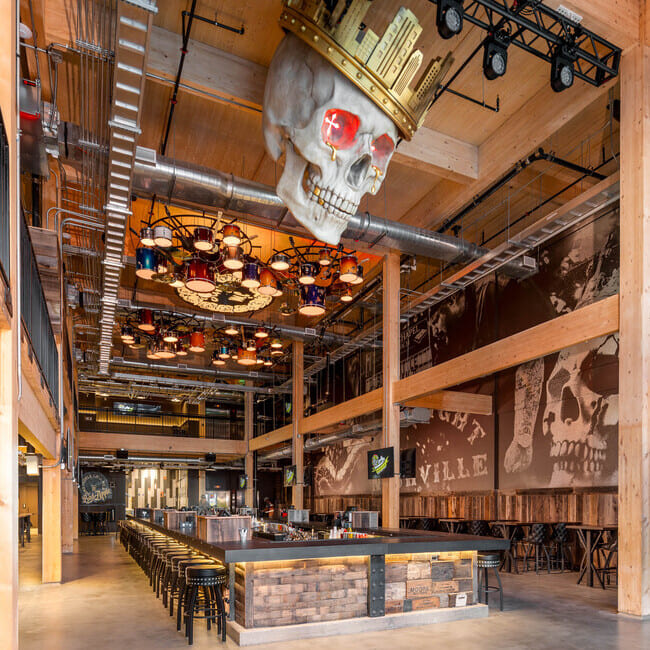
The five-story property at 209 Broadway, home to Goodnight Nashville, is being marketed with an asking price around $100 million, according to listing coverage and brokerage materials. Early headlines framed this as Jelly Roll “selling his bar.” In reality, available information points to the building’s owner testing the market while the artist-branded venue continues operating under a lease or licensing arrangement.
Key Details
• Address: 209 Broadway, Lower Broadway’s core.
• Footprint: Approximately 31,000 square feet across five floors plus rooftop.
• Timeline: New construction in 2024; public opening in early 2025.
• Asking price: About $100,000,000 (marketing figure).
• Parties: Phoenix-based Evening Entertainment Group (EEG) developed and operates the concept side; the structure reflected in listings is tenant-in-place under a long-term lease rather than an artist-owned building sale.
Why It Matters
At roughly $3,192 per square foot, the sale price lands firmly in premium territory but still below the recent peaks defining Nashville’s neon district. For comparison, Jack’s Bar-B-Que fetched over $4,200 per square foot in its reported deal with the owners of Robert’s Western World, while the building housing Jon Bon Jovi’s former JBJ’s Nashville carried a listing near $130 million, or about $3,500 per square foot. Against those benchmarks, Goodnight Nashville stands in the upper tier of Broadway valuations, just shy of record-setting levels.
But beyond the numbers, ownership structure explains the real play here. Evening Entertainment Group (EEG) specializes in short-cycle nightlife development a model built on identifying prime entertainment corridors, launching high-traffic venues under recognizable brands, stabilizing cash flow, and then selling the underlying real estate while retaining or transferring operational control. It’s an approach honed through EEG’s projects in Phoenix and Scottsdale, and it’s now shaping the economics of Lower Broadway.
This strategy highlights a broader trend: the new wave of Nashville’s nightlife real estate is increasingly driven by out-of-state investment groups, not legacy local operators. What used to be a patchwork of family-owned bars and homegrown honky-tonks is evolving into a skyline influenced by national developers treating music-themed venues as performing assets real estate with built-in audiences, predictable rent, and celebrity appeal.
Context & Fan Reaction
On Lower Broadway, artist-branded venues are often structured as three layers: a deed-holding owner, an operating hospitality group, and an artist who licenses their name and creative direction. In that setup, a building can change hands without the venue closing or the sign out front changing. Fans reacting online have focused less on whether Goodnight Nashville will disappear there is no such indication and more on the pace of build-brand-list cycles that now define downtown’s entertainment real estate. The artist’s brand increasingly functions as a marketing anchor for the investment property, not a guarantee of local, long-term ownership.
ByteSize Commentary
This situation reads less like an artist cashing out of a passion project and more like a calculated property play. In the modern entertainment landscape, the business model often isn’t about running the bar—it’s about owning the dirt beneath it. When a celebrity-backed venue opens, the headline draws fans, but the underlying value often lies in the long-term lease agreement that follows.
A recognizable name on the marquee transforms a building into a marketable asset. The next buyer isn’t purchasing a bar or a legacy; they’re acquiring steady rent backed by brand equity. That combination reliable cash flow plus cultural cachet can command a premium in real estate circles.
So, when a space goes up for sale less than a year after its grand opening, it doesn’t necessarily signal failure or fatigue. It signals strategy. The celebrity brand generates attention, the lease locks in income. Together, they create a formula where the business of country nightlife looks less like honky-tonk hustle and more like portfolio management with a neon glow.
What To Watch Next
• Deed records: Any transfer of title for 209 Broadway in Davidson County will confirm buyer and consideration.
• Lease language: Phrases like “tenant in place” or “long-term lease” will signal operational continuity after a sale.
• Comparable trades: Per-square-foot pricing on new listings and closings across Lower Broadway.
• Statements: Comments from the deed owner, Evening Entertainment Group, or Jelly Roll’s team clarifying strategy and term.


Comments
Post a Comment